A quality exercise bike is an investment in your health, but like any piece of equipment, it demands regular attention. At B.T. Fitness Repair, we’ve spent nearly five decades working on home fitness equipment, and we can tell you with certainty: the bikes that last decades are the ones whose owners treat maintenance seriously. Exercise bike maintenance isn’t complicated, but it matters. The difference between a machine that runs quietly and smoothly for 10 years and one that breaks down after two is often nothing more than a few minutes of preventive care each month.
When you skip maintenance, small problems snowball. A belt that starts to slip gets noisier, stickier, and eventually snaps. A chain that’s not lubricated enough becomes brittle. Bearings that collect dust and sweat corrode. Our team has seen bikes that could have had decades of reliable service end up in the recycling bin because owners didn’t know what they didn’t know. This guide walks you through exactly what we recommend—the real maintenance schedule that keeps exercise bikes working like the day they came out of the box.
Understanding Your Exercise Bike’s Key Systems
Every exercise bike, whether it’s a spinning bike, a recumbent model, or an upright stationary bike, relies on a handful of critical systems. Understanding these systems helps you know what to look for and when to take action. The resistance mechanism—whether it’s magnetic, friction, or belt-driven—is what creates the workout. The flywheel converts your pedaling motion into smooth, consistent rotational resistance. The seat and handlebars are comfort systems that also bear significant load during use. The drivetrain—which includes the chain or belt, pedals, and crank—transfers your leg power to the flywheel. The frame provides structural support and must stay solid and stable. The console displays metrics and controls resistance.
When you understand how these parts work together, preventive maintenance becomes intuitive. You’re not just following a checklist; you’re protecting the systems that matter most.
Lubrication and Friction: The Foundation of Longevity
The single most important maintenance task for exercise bike maintenance is lubrication. Friction is the enemy of moving parts. Without proper lubrication, metal slides against metal, generating heat, noise, and wear. We recommend checking your bike’s lubrication points every month if you use it regularly, and every three months if use is lighter.
For chain-driven bikes, apply a light machine oil or bike-specific chain lubricant to the chain every 40–50 hours of use. Wipe away excess with a clean cloth; buildup attracts dust and grit. For belt-driven bikes, most manufacturers don’t recommend user lubrication of the belt itself, but the bearing assemblies that support the belt need attention. Check your user manual for the specific lubrication points on your model.
The pedal axles, the crank pin, and any articulation points where the seat post slides into the frame should all receive a small amount of lightweight machine oil twice yearly. We’ve seen bikes that squeak terribly simply because the seat post connection was dry—a five-second oiling stops the noise immediately.
Cleanliness and Corrosion Prevention
Sweat is a bike’s nemesis. Salt corrodes metal, and moisture promotes rust. If you use your bike in a climate-controlled home, this is less urgent, but if you work out in a garage, a humid room, or anywhere near salt air, corrosion prevention becomes critical.
Our recommendation is straightforward: wipe down your bike after every use if you sweat heavily. Use a soft, dry cloth or a cloth lightly dampened with plain water and vinegar (one part white vinegar to three parts water). This removes sweat salts without damaging the finish or electronics. Pay special attention to the frame, the console, and around the pedals and crank.
Every six months, inspect the frame, especially welds, hinges, and joints, for any signs of rust. Surface rust can be removed with a soft brass brush and light machine oil. Deep rust requires professional attention—call us if you spot it.
Monthly and Quarterly Maintenance Checklist
We’ve worked with thousands of home exercisers, and the ones with the most reliable bikes follow a simple rhythm. Here’s what we recommend for every exercise bike owner:
Every time you use your bike: Wipe it down with a dry or lightly damp cloth. Check that the pedals move freely and the crank rotates without grinding. Make sure the seat and handlebars are secure and don’t move when you tug them.
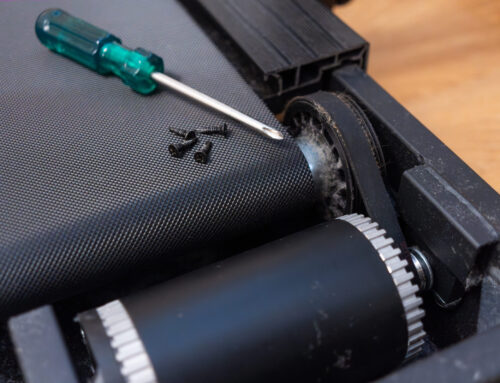
Monthly (if you use your bike 4–5 times per week): Check the belt or chain for visible wear, fraying, or slack. If the chain is loose, tighten it according to your manual. Inspect all bolts and fasteners; hand-tighten any that have started to loosen. Clean around the flywheel and resistance mechanism with a soft brush to remove dust and lint. Apply lubrication to the chain if applicable, or check bearing lubrication points as your manual specifies.
Every three months: Do a full visual inspection of the frame for cracks, rust, or bending. Test the console to confirm all buttons and the display are responsive. Check that the resistance dial or electronic controller responds accurately. Inspect the seat post and handlebars for any cracking or loosening. Verify that the pedals haven’t cracked and that the pedal straps are intact and adjustable.
Every six months: Perform a deep clean of the bike. Disassemble any removable parts (following your manual) and clean them. Check all electrical connections to the console; if any are corroded or loose, clean gently with a dry cloth or replace if damaged. Verify that the bike is level and stable on the floor—adjustable feet can shift, and a tilted bike stresses the frame.
Common Mistakes That Shorten Your Bike’s Life
We see the same preventable problems over and over. The most common mistake is ignoring squeaks and grinding sounds. Noise is always a signal that something needs attention. A squeaking pedal axle means it’s drying out. A grinding from the flywheel means dust has accumulated in the resistance mechanism. Ignoring these noises doesn’t make the problem go away; it makes it worse.
The second major mistake is over-tightening bolts. Many people think ‘tighter is better,’ but bolts on exercise bikes should be snug, not cranked down with maximum force. Over-tightening strips threads, cracks welds, and warps the frame. Use a wrench that fits properly and stop when you feel solid resistance.
A third mistake is using the wrong lubricants. Never use WD-40 or heavy grease on exercise bikes. WD-40 dries out and leaves a sticky residue. Heavy grease attracts dust and creates gunk. Use lightweight machine oil or bike-specific chain lube—that’s it. Similarly, don’t spray water directly at the console or electronics; moisture in these components causes short circuits.
Finally, many owners place their bikes in damp environments and don’t account for it. A basement with high humidity or a garage in a salty climate needs extra maintenance. If that’s your situation, wipe your bike down twice a week and inspect for corrosion monthly instead of quarterly.
Frequently Asked Questions About Exercise Bike Maintenance
How often should I replace the belt on my exercise bike?
A quality exercise bike belt lasts 3,000 to 5,000 hours of use under normal conditions. If you use your bike 5 hours a week, that’s roughly 15 years. However, if you neglect cleaning and lubrication, a belt can degrade in 2–3 years. We recommend replacing the belt when it shows visible wear, fraying, or when it slips during resistance. Don’t wait for it to break.
What should I do if my exercise bike squeaks?
A squeak almost always means a dry joint or bearing. Start by identifying where the squeak comes from. Is it from the pedals, the seat, the handlebars, or the flywheel? Once you pinpoint it, apply a tiny amount of lightweight machine oil to that joint. Wipe away excess and test. If the squeak persists, the bearing may be damaged, and you’ll need professional service. At B.T. Fitness Repair, we replace bearings regularly and it’s straightforward.
Can I use my exercise bike in a garage or humid space?
Yes, but with extra care. If your garage is unheated, uninsulated, or exposed to salt air, plan on more frequent cleaning and lubrication. Wipe your bike down after every session. Do a deep inspection quarterly for rust. Use a rust-preventive oil on metal surfaces every few months. If you’re in a coastal area, consider applying a thin coat of automotive wax to the frame every six months to create a moisture barrier.
What’s the difference between magnetic and friction resistance, and how do I maintain each?
Magnetic resistance uses electromagnets to create resistance; it’s nearly silent and very smooth. Friction resistance (also called wind-resistance on some models) uses pads pressed against the flywheel; it’s louder but more responsive to quick adjustments. Magnetic systems need minimal maintenance—just keep the flywheel clean. Friction systems need periodic replacement of the resistance pads, usually every 2–3 years depending on use. Both benefit from the same belt, chain, and bearing care we’ve outlined.
Is it normal for my exercise bike to make noise?
Some noise is normal. Magnetic resistance bikes are nearly silent except for wind noise from the flywheel. Chain-driven bikes produce a light chain sound. Belt-driven bikes are quiet. If your bike suddenly becomes noisier than it was when new, something has changed. That’s your signal to inspect. Are bolts loose? Is the chain slack? Is a bearing drying out? Our team uses sound as a diagnostic tool every day—odd noise is always worth investigating.
Make Your Exercise Bike a 10-Year Investment
Exercise bike maintenance is not complicated. It’s not expensive. And it doesn’t require special tools or expertise. What it requires is consistency. Thirty minutes of care each month—a wipe-down, a lubrication check, a bolt tightening—is the difference between a bike that serves you reliably for a decade and one that becomes an expensive paperweight in five years.
At B.T. Fitness Repair, we believe that good equipment deserves good care. That’s the ‘old fashion quality service’ we’re known for. Our team has fixed thousands of neglected bikes that could have run flawlessly with basic maintenance. We’ve also worked with customers whose diligence kept their bikes running like new for 15 or 20 years. The outcome is almost always up to you.
Start this month. Get your bike on a monthly maintenance schedule. Add it to your calendar if it helps—the first Sunday of every month, spend five minutes checking and lubricating. If you run into something that feels beyond your comfort level, that’s exactly what we’re here for. Call or email us anytime. We’re happy to walk you through a repair, recommend the right parts, or handle it for you. Your bike will thank you.